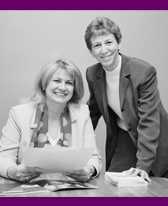
By Mary Anne Wampler
While consulting and training in many organizations, I've noticed for some time now that leaders are understandably entrenched in "survival mode" - showing up every day truly believing that "if I, and my people, just work hard enough, things will turn around." The truth is they are all working at full capacity. And, the stress is beginning to manifest in a host of ways.
While 'doing' is critical, what I've noticed is that leaders have placed all their attention on the external world, not on their 'internal' state of well being. Focusing on the external world, much of which we can't control, creates a 'fog' of sorts that results in performing habitual acts that produce, at best, mediocre results. I've been through the"fog" recently myself. Thank goodness it has lifted!
What I know is that working from the 'inside out', that is, staying connected to what is important to me, doing what energizes me, and taking care of myself -- body, mind and spirit -- always produces better results.
Why is that? Because when you feel better and are focusing on doing things that energize you and are important to you, you are present to every moment and make the best of them.
When discussing my recent fog and what I've been observing with Theresa, she reminded me of the quote we created years ago, I couldn't help but smile and agree - authentic leaders are those who embrace self discovery as a way of life! Choose it today and experience the difference!
Monday, February 8, 2010

Wednesday, July 1, 2009
Wednesday, April 29, 2009
The Enneagram and Living Your Life with Passion
Mary Anne recently facilitated a break-out session at the 23rd Annual Women's Leadership Conference. What an incredible experience it was! 100+ women joined the session and learned a new technology, Brainwave Vibration, a simple, easy to do practice reduces stress, increases attention, releases stagnant energy, and channels healthy energy that can be focused on achieving what we want and truly desire. See link to short video demonstration of this technology.
The main focus of the talk was to help participants discover or re-discover their passion - what really drives them to do what they do - and so participants were asked to reflect on what their life would be like is they were living it with passion and then share with a partner their reflections. Not surprisingly, many women said they weren't living with passion yet they could describe what it would be like if they were. Listen in as Mary Anne asks the audience to reflect on what it takes to live a life of passion.
Next Mary Anne introduced a 4-part model for living your life with passion (Listen in as Mary Anne introduces model to the group) and then she asked the audience to personally apply the model to their search for living a life with passion.
Last but not least the audience was asked to reflect on what gets in the way of living a life with passion. Mary Anne offered the Enneagram as a tool that helps uncover these barriers as well as reveals the resources and strengths we have that can support us in achieving what we desire most. Listen as she provides an overview of the Enneagram.
Living you life with passion is within your reach -- take some time to reflect on what's getting in your way and then go for it! What's the alternative?
The main focus of the talk was to help participants discover or re-discover their passion - what really drives them to do what they do - and so participants were asked to reflect on what their life would be like is they were living it with passion and then share with a partner their reflections. Not surprisingly, many women said they weren't living with passion yet they could describe what it would be like if they were. Listen in as Mary Anne asks the audience to reflect on what it takes to live a life of passion.
Next Mary Anne introduced a 4-part model for living your life with passion (Listen in as Mary Anne introduces model to the group) and then she asked the audience to personally apply the model to their search for living a life with passion.
Last but not least the audience was asked to reflect on what gets in the way of living a life with passion. Mary Anne offered the Enneagram as a tool that helps uncover these barriers as well as reveals the resources and strengths we have that can support us in achieving what we desire most. Listen as she provides an overview of the Enneagram.
Living you life with passion is within your reach -- take some time to reflect on what's getting in your way and then go for it! What's the alternative?
Monday, March 16, 2009
Reflections on Leaders in Crisis
Last week I spent four days working with a department within a large organization that is and has been in crisis for the past six months. They have had lay-offs, positions have been eliminated, all staff were mandated to take 4 unpaid furlough days, and personnel changes made at higher levels in the organization are circling around the department wondering how much more can be cut. Needless to say, leadership is stressed out; under incredible pressure to produce results with fewer and fewer resources. I am there to develop the leadership team so that they can stay focused on their priorities and build and grow the department and its staff. Below are my reflections on this time working with these incredibly courageous and inspirational leaders.
- During these tough and stressful times it takes courage to get out of bed and show up everyday to a work place where employees expect you, as their manager, to keep them motivated and keep telling them everything is going to be okay. I salute all of you leaders who are leading the way for your staff during these tough times!
- Taking care of yourself first is crucial. Not sleeping, working too many hours, not getting enough physical exercise and not eating healthy food results in a cranky, unhealthy person who can not be there for his/her people let alone him/herself. The leaders who make self care a priority are the ones who have the best resilience and capacity for leading during stressful times.
- Fix the person first, then the problem. As leaders we tend to be looked to to solve problems and so when employees bring problems to us we automatically go in to fix-it mode. The next time an employee comes in with a problem, take a moment to acknowledge the person before you and let him/her know you appreciate them being on your team. It's amazing the length to which employees will go for their leaders when they feel appreciated and valued.
- Being a leader often puts you in a position where you have information that can not always be shared with your employees. This presents a particular challenge and can become a credibility issue for a leader if not handled with care. Back in November, the leader of this department knew lay-offs were coming and didn't want her staff to hear about them from the press or any one else so she gather her whole staff and told them what she knew -- which was the truth - and promised to keep them informed along the way. She stuck to her word and so when an employee last week asked her about a rumor that the department was going to move to another floor in the building, she said "there have been talks going on but I promise you when I know, you will know." This is an example of a leader who has earned credibility through her actions not her words!
I'll leave you with one of my favorite quotes.
"What lies behind us and what lies before us are tiny matters compared to what lies within us."
Ralph Waldo Emerson
- During these tough and stressful times it takes courage to get out of bed and show up everyday to a work place where employees expect you, as their manager, to keep them motivated and keep telling them everything is going to be okay. I salute all of you leaders who are leading the way for your staff during these tough times!
- Taking care of yourself first is crucial. Not sleeping, working too many hours, not getting enough physical exercise and not eating healthy food results in a cranky, unhealthy person who can not be there for his/her people let alone him/herself. The leaders who make self care a priority are the ones who have the best resilience and capacity for leading during stressful times.
- Fix the person first, then the problem. As leaders we tend to be looked to to solve problems and so when employees bring problems to us we automatically go in to fix-it mode. The next time an employee comes in with a problem, take a moment to acknowledge the person before you and let him/her know you appreciate them being on your team. It's amazing the length to which employees will go for their leaders when they feel appreciated and valued.
- Being a leader often puts you in a position where you have information that can not always be shared with your employees. This presents a particular challenge and can become a credibility issue for a leader if not handled with care. Back in November, the leader of this department knew lay-offs were coming and didn't want her staff to hear about them from the press or any one else so she gather her whole staff and told them what she knew -- which was the truth - and promised to keep them informed along the way. She stuck to her word and so when an employee last week asked her about a rumor that the department was going to move to another floor in the building, she said "there have been talks going on but I promise you when I know, you will know." This is an example of a leader who has earned credibility through her actions not her words!
I'll leave you with one of my favorite quotes.
"What lies behind us and what lies before us are tiny matters compared to what lies within us."
Ralph Waldo Emerson
Managing FEAR in the Moment
Who isn't having a few fears running through them these days? We are surrounded by the news about our faltering economy, Wall Street, bank crisis and so much more, so we are wondering how are you doing?
Fear is a normal human response yet it is also a conditioned response that runs on automatic if we let it. Some define fear as False Evidence Appearing Real. All this to say that fear feels real and yet often times it is merely a thought that we believe to be true.
How do you know if it is real or not? First observe yourself thinking the thought. From this position of objectivity,
1) ask yourself what evidence or proof you have that validates your fear or thought then, 2) notice the intensity of the thought, the emotions that are arising and the impact it is having on you physically. Next, move your attention to your gut and say "I have a thought that is creating a reaction (describe the reaction you are having) in me. What will I choose to do next?"
Having a strategy ready when fear arises allows you to acknowledge it, assess it and then move into action. As Theresa often says, "the goal is to shorten the window of time that we are on automatic [or having fearful thoughts in this instance]." Fear will continue to arise in us and we will continue to catch ourselves on automatic. The good news is you have control as to how long it runs its course and the impact it has on you.
Listen to Peter O'Hanrahan guide you through a 3 Centers Practice that helps you strengthen your inner observer and practice shifting your attention from your head to your heart to your gut.
Fear is a normal human response yet it is also a conditioned response that runs on automatic if we let it. Some define fear as False Evidence Appearing Real. All this to say that fear feels real and yet often times it is merely a thought that we believe to be true.
How do you know if it is real or not? First observe yourself thinking the thought. From this position of objectivity,
1) ask yourself what evidence or proof you have that validates your fear or thought then, 2) notice the intensity of the thought, the emotions that are arising and the impact it is having on you physically. Next, move your attention to your gut and say "I have a thought that is creating a reaction (describe the reaction you are having) in me. What will I choose to do next?"
Having a strategy ready when fear arises allows you to acknowledge it, assess it and then move into action. As Theresa often says, "the goal is to shorten the window of time that we are on automatic [or having fearful thoughts in this instance]." Fear will continue to arise in us and we will continue to catch ourselves on automatic. The good news is you have control as to how long it runs its course and the impact it has on you.
Listen to Peter O'Hanrahan guide you through a 3 Centers Practice that helps you strengthen your inner observer and practice shifting your attention from your head to your heart to your gut.
Monday, February 2, 2009
Business Leaders Voice Their Concerns and Responses to the Economy
Fifty U.S. business leaders, representative of Fortune 500 companies and both small business, shared their perceptions and reactions to today's challenging business environment at Transform Inc.'s September 2008 Enneagram Leadership Conference in Alexandria, VA. Mary Anne Wampler facilitated the session which took place on the third and final day of a Enneagram Leadership Conference when attendees had established rapport and comfort level with one another.
By day two, Mary Anne said, "It is as obvious as an elephant in the room," And while no one was coming out and saying "this is the toughest time I've had as a leader," it was evident that everyone had something on their mind. It was nothing short of a huge sigh of relief when leaders were given the opportunity to discuss their feelings about today's business environment. This article offers a summarization of those comments - with the hope that other business professionals will find both solace and renewed optimism from the shared perspectives.
Transform: What are the specific business challenges as a leader you are facing?
· What used to work isn't working now. We are having to evaluate what we are doing and make decisions on how to do more with less resources, time, effort.
· The sales environment is tougher. We have to be better at sales. We have to work harder and be more focused on the highest pay-off activities. We need more skills. The sales people who were successful when the economy was good are now struggling and even the very best sales people are struggling or working twice as hard to get less of what they got before.
· My clients are not as confident. They are reluctant to invest. I have to work much harder to instill confidence in the buyers. The sales cycle is also longer and requires more hand-holding, listening, reworking of quotes to fit tighter budgets. Price is a major factor.
· Traditional offerings and services of the past aren't enough. I need to be very creative in meeting my clients' needs and budget.
· Keeping morale up is a full-time job. Sales professionals are impacted by external factors - news, friends being laid off or downsized. Leading others and instilling confidence in employees takes more effort.
· When working under stressful conditions, the ego operates on automatic and little things can have a big impact on others.
· There is the need to constantly reevaluate our internal organization in order to respond to the marketplace and customers. The demands made of our employees need to be centered and focused - not reactive and impatient.
· Balancing long-term and short-term focus is difficult when you don't know what is going to happen externally from one day-to-day to the next.
· Constant change is the reality. Learning to manage change in one's self, in one's employees and the business forces is crucial.
Transform: Given your current reality, what opportunities does this situation offer for you, as a leader, your organization and your employees?
· With things a little slower, you can take time to improve processes and retool employees to become more adaptable and responsive to change.
· You can take time to develop and grow one's self - to work on leadership skills and hone sales skills.
· It's important to focus on where the opportunities are as opposed to what's not happening.
· You have to be laser-focused on where time and resources are being spent - both personally and with all your staff.
· We're being forced to think outside the box - to think differently and more creatively on how to keep and sustain relationships. We're learning what services and products to offer and how to stay in front of buyers.
· Now is the time to build collaborative relationships - to look for partnerships with other companies to offer more efficient services and offerings.
When reflecting on these comments, Mary Anne and I were struck by a few things that perhaps run counter intuitive to what we are hearing from the news, media and fear-based leaders. First, leaders who are truly leading during this tough time are fully committed to the continued growth and development of their employees and themselves. Now is not the time to abandon developmental training. Rather, it is the time to invest in your people. Second, now is the opportunity to rethink 'how' you are doing business - a 'housecleaning' if you will. Take stock of how you are delivering services to customers and, of that, what is most efficient and productive. Third, heightened your attention and focus on customer relationships. It is a crucial component to riding out these challenging times. Build stronger, more collaborative relationships with your customers. Spend time with them. Learn what's going on in their business and how you can add value to what they offer. Ensure that every encounter they have with your company is exactly the experience you want them to have. Lastly, successful leaders are those who are taking care of themselves physically, mentally, emotionally and even, spiritually. Pay attention to the impact you are having on your their employees and be intentional regarding the impact you want to have. Work diligently to keep their teams focused on the opportunities and priorities that exist.
We'd love to hear from you. If you'd like to share your responses to the questions, send us an email at info@transforminc.com.
By day two, Mary Anne said, "It is as obvious as an elephant in the room," And while no one was coming out and saying "this is the toughest time I've had as a leader," it was evident that everyone had something on their mind. It was nothing short of a huge sigh of relief when leaders were given the opportunity to discuss their feelings about today's business environment. This article offers a summarization of those comments - with the hope that other business professionals will find both solace and renewed optimism from the shared perspectives.
Transform: What are the specific business challenges as a leader you are facing?
· What used to work isn't working now. We are having to evaluate what we are doing and make decisions on how to do more with less resources, time, effort.
· The sales environment is tougher. We have to be better at sales. We have to work harder and be more focused on the highest pay-off activities. We need more skills. The sales people who were successful when the economy was good are now struggling and even the very best sales people are struggling or working twice as hard to get less of what they got before.
· My clients are not as confident. They are reluctant to invest. I have to work much harder to instill confidence in the buyers. The sales cycle is also longer and requires more hand-holding, listening, reworking of quotes to fit tighter budgets. Price is a major factor.
· Traditional offerings and services of the past aren't enough. I need to be very creative in meeting my clients' needs and budget.
· Keeping morale up is a full-time job. Sales professionals are impacted by external factors - news, friends being laid off or downsized. Leading others and instilling confidence in employees takes more effort.
· When working under stressful conditions, the ego operates on automatic and little things can have a big impact on others.
· There is the need to constantly reevaluate our internal organization in order to respond to the marketplace and customers. The demands made of our employees need to be centered and focused - not reactive and impatient.
· Balancing long-term and short-term focus is difficult when you don't know what is going to happen externally from one day-to-day to the next.
· Constant change is the reality. Learning to manage change in one's self, in one's employees and the business forces is crucial.
Transform: Given your current reality, what opportunities does this situation offer for you, as a leader, your organization and your employees?
· With things a little slower, you can take time to improve processes and retool employees to become more adaptable and responsive to change.
· You can take time to develop and grow one's self - to work on leadership skills and hone sales skills.
· It's important to focus on where the opportunities are as opposed to what's not happening.
· You have to be laser-focused on where time and resources are being spent - both personally and with all your staff.
· We're being forced to think outside the box - to think differently and more creatively on how to keep and sustain relationships. We're learning what services and products to offer and how to stay in front of buyers.
· Now is the time to build collaborative relationships - to look for partnerships with other companies to offer more efficient services and offerings.
When reflecting on these comments, Mary Anne and I were struck by a few things that perhaps run counter intuitive to what we are hearing from the news, media and fear-based leaders. First, leaders who are truly leading during this tough time are fully committed to the continued growth and development of their employees and themselves. Now is not the time to abandon developmental training. Rather, it is the time to invest in your people. Second, now is the opportunity to rethink 'how' you are doing business - a 'housecleaning' if you will. Take stock of how you are delivering services to customers and, of that, what is most efficient and productive. Third, heightened your attention and focus on customer relationships. It is a crucial component to riding out these challenging times. Build stronger, more collaborative relationships with your customers. Spend time with them. Learn what's going on in their business and how you can add value to what they offer. Ensure that every encounter they have with your company is exactly the experience you want them to have. Lastly, successful leaders are those who are taking care of themselves physically, mentally, emotionally and even, spiritually. Pay attention to the impact you are having on your their employees and be intentional regarding the impact you want to have. Work diligently to keep their teams focused on the opportunities and priorities that exist.
We'd love to hear from you. If you'd like to share your responses to the questions, send us an email at info@transforminc.com.
Monday, July 28, 2008
The Enneagram in Business: Real-World Use Demonstrate its Transformational Power
| Jim McPartlin is the Senior Vice President of Operations and Administration at Andre Balazs Properties, the boutique hotelier, with luxury properties in New York, Miami, and Los Angeles. McPartlin, a 20 year veteran of the hotel and hospitality industry, and a Certified Enneagram Teacher since 2000, knows the benefits of Enneagram use in the workplace. For 15 years, he has instructed and utilized the Enneagram to build successful sales and management teams for high profile hotel corporations across the U.S. |
| McPartlin's introduction to the Enneagram I still talk to people I introduced the Enneagram to 3-5 years ago, many of whom are still using it or have gone onto become Certified Enneagram Teachers. It's so rewarding to work with groups and see people's eyes light up in recognition of their own style. Through this entire process I've realized that I am a teacher. David Daniels gave me some good advice recently when I was questioning whether my chosen profession was the right path. In essence, he told me that maybe my life path was teaching those in business the elements of heart-principled leadership via the Enneagram. That has stuck with me - I realize now that I am indeed a teacher, and my path to soul management and peace is through the Enneagram. It is a profound gift that I want to share with others. In Closing... On the Enneagram's workplace benefits |

Tuesday, July 1, 2008
Business Leaders talk about how using the Enneagram in Business has increased leadership and organizational effectiveness
Listen to what business leaders say about using the Enneagram for leadership development and organizational effectiveness.
Thursday, June 26, 2008
A CEO's Perspective on Using the Enneagram in Business
When surveyed on satisfaction with work, their company, opportunities for growth, and interaction with their managers – our team members had their highest employment engagement scores at Intuit.”
Scott K. Wilder
Group Manager of Intuit's QuickBooks Online
Small Business Community and Collaboration website
Scott K. Wilder is currently the Group Manager of Intuit's QuickBooks Online Small Business Community and Collaboration website. Before working at Intuit, he was the Vice President of Marketing and Product Development at KBtoys.com and eToys. He has held numerous senior management positions at America Online, Apple Computer, Silicon Graphics, Borders.com and American Express. When Scott worked at America Online and its subsidiary, GNN.com, Scott was involved in creating the first online advertisement and commercial website. Scott received master's degrees from The Johns Hopkins University and New York University. He also holds a degree in Leadership Coaching from Georgetown University. Scott is an advocate for use of the Enneagram – in one’s personal and professional life. He recently shared his thoughts on the Enneagram and its use at Intuit.
His Introduction to the Enneagram
“I’ve always been interested in personal development and team dynamics. When I moved to California from the East Coast in 1991, I was given the name of person who might be helpful with my intuitive studies – who turned out to be Helen Palmer. I’d studied Myers Briggs and initially viewed the Enneagram as another type of profiling tool. However, I discovered with time that the Enneagram brings a lot more to the table – in terms of both career and personal growth.”
Use as a Profiling Tool
“The Enneagram resonates with me more than other profiling tools. It is deeper and more complex in terms of the information it reveals, offering insights into people’s strengths as well as when outside in their comfort zones. It also focuses on ones behavior when interacting with others. The narrative tradition provides an approach that allows you to see yourself in the mirror. I participated in a panel of other Style 7 people and saw other people so much like me.”
In the Workplace
“I was intrigued that the Enneagram was used very little in the business environment. Intuit has a strong learning culture and embraces the “learn, teach, learn” philosophy. The company has its own profiling methodology called “Colors.” Everyone at Intuit is trained in it. However, I also introduced the Enneagram to my team which is dispersed in various parts of the country and made up of people of all cultures and backgrounds. We used it when we were forming our team and it helped create an open environment and accelerated our understanding of each other.”
Employee Satisfaction
“When surveyed on their satisfaction with work, their company, opportunities for growth, and interaction with their managers – our team members had their highest employment engagement scores at Intuit. I believe use of the Enneagram had a lot to do with this by creating an open environment. When asked by other managers about these high scores, I attributed it to our work with the Enneagram.”
Scott Wilder
Every Leader's Challenge:
The Art of Greatness NOW
The Enneagram Leadership Conference for Executives, Owners, and Managers
SEPTEMBER 10-12, 2008 • ALEXANDRIA, VIRGINIA
Facilitated by: David Daniels, M.D.• Theresa Gale, CET • Peter O’Hanrahan, CET • Mary Anne Wampler, CET
To learn more: www.transforminc.com/tlc.htm
Scott K. Wilder
Group Manager of Intuit's QuickBooks Online
Small Business Community and Collaboration website
Scott K. Wilder is currently the Group Manager of Intuit's QuickBooks Online Small Business Community and Collaboration website. Before working at Intuit, he was the Vice President of Marketing and Product Development at KBtoys.com and eToys. He has held numerous senior management positions at America Online, Apple Computer, Silicon Graphics, Borders.com and American Express. When Scott worked at America Online and its subsidiary, GNN.com, Scott was involved in creating the first online advertisement and commercial website. Scott received master's degrees from The Johns Hopkins University and New York University. He also holds a degree in Leadership Coaching from Georgetown University. Scott is an advocate for use of the Enneagram – in one’s personal and professional life. He recently shared his thoughts on the Enneagram and its use at Intuit.
His Introduction to the Enneagram
“I’ve always been interested in personal development and team dynamics. When I moved to California from the East Coast in 1991, I was given the name of person who might be helpful with my intuitive studies – who turned out to be Helen Palmer. I’d studied Myers Briggs and initially viewed the Enneagram as another type of profiling tool. However, I discovered with time that the Enneagram brings a lot more to the table – in terms of both career and personal growth.”
Use as a Profiling Tool
“The Enneagram resonates with me more than other profiling tools. It is deeper and more complex in terms of the information it reveals, offering insights into people’s strengths as well as when outside in their comfort zones. It also focuses on ones behavior when interacting with others. The narrative tradition provides an approach that allows you to see yourself in the mirror. I participated in a panel of other Style 7 people and saw other people so much like me.”
In the Workplace
“I was intrigued that the Enneagram was used very little in the business environment. Intuit has a strong learning culture and embraces the “learn, teach, learn” philosophy. The company has its own profiling methodology called “Colors.” Everyone at Intuit is trained in it. However, I also introduced the Enneagram to my team which is dispersed in various parts of the country and made up of people of all cultures and backgrounds. We used it when we were forming our team and it helped create an open environment and accelerated our understanding of each other.”
Employee Satisfaction
“When surveyed on their satisfaction with work, their company, opportunities for growth, and interaction with their managers – our team members had their highest employment engagement scores at Intuit. I believe use of the Enneagram had a lot to do with this by creating an open environment. When asked by other managers about these high scores, I attributed it to our work with the Enneagram.”
Scott Wilder
Every Leader's Challenge:
The Art of Greatness NOW
The Enneagram Leadership Conference for Executives, Owners, and Managers
SEPTEMBER 10-12, 2008 • ALEXANDRIA, VIRGINIA
Facilitated by: David Daniels, M.D.• Theresa Gale, CET • Peter O’Hanrahan, CET • Mary Anne Wampler, CET
To learn more: www.transforminc.com/tlc.htm
Sunday, June 1, 2008
CEO says "The Enneagram is the Most Powerful Self-Development Tool we've ever used."
The Enneagram in Business: Real-World Applications Demonstrate its Transformational Power
by Theresa Gale
Mary Anne and I have made a career of introducing the Enneagram in the workplace to improve operations and promote growth. However, I thought you might benefit from reading how the Enneagram has served national business leaders. In this and upcoming editions of our newsletter, we'll give business corporate professionals center stage, allowing them to share their individual and practical applications of Enneagram use in their individuals worlds.
 Scott Jamieson is the former President and CEO of The Care of Trees, an award-winning, tree preservation firm with 500 employees and 24 locations nationwide. Scott describes the Enneagram as being "the most powerful self development tool" he has ever used. During the nine years in which Scott oversaw The Care of Trees, it became the second largest commercial and residential tree preservation firm in the world; it increased in sales by 112%; reduced sales outstandings from 45 to 31 days; increased in company stock value by 130%; was the recipient of the Arthur Andersen Best Practices award for Motivating and Retaining Employees; and was the subject of magazine, radio and television interviews.
"The issues that curtail business success aren't so much about products, services, or pricing structures. They are about people," says Scott, who will soon become a Certified Enneagram Teacher. "When employees are growing, the organization grows exponentially." Scott left The Care of Trees earlier this year when it was sold. He reflects on the many ways in which the Enneagram helped him in his leadership efforts.
Jamieson on Corporate Culture
"The Enneagram was introduced as a sale training tool at The Care of Trees, but soon became indoctrinated into virtually every aspect of our corporate culture. It really helped our leadership become aware of their management styles and break down the barriers that impeded communication and efficiency. For example, one of our regional managers was awakened to his defensive communication approach and the effect it had on others. Ultimately, we all achieved greater awareness of ourselves and our peers, resulting in greater productivity."
On Corporate Behaviors
"While the Care of Trees had one of the best safety records in the industry, the company still had its share of on-the-job injuries. Collectively, our management team decided to improve upon this status by adopting a "no one in our family gets hurt" philosophy which translated to an advance analysis of potential dangers at work sites. The mutual trust developed through the Enneagram self discovery process resulted in an environment of approachability that encouraged our male dominated staff to 'watch each other's back.' In the first year of implementation, the new safety behaviors resulted in a 20-30% decrease in accidents and a $100,000 reduction in worker's compensation claims."
On Sales Growth
"Use of the Enneagram had a huge impact on sales, revealing to our staff how their presentation of themselves was perceived by those of other Enneagram styles. Staff members who were a Style 9 learned how to bounce back from rejection. Those who were Style 2 discovered their pre-disposition of "giving away the store." Another sales person who had repeatedly attempted to reach the million dollar mark was able to do so following his self discovery. Following Enneagram training, company sales consistently increased by 10% a year."
On Personal Leadership Style
"As a Style 9, I discovered that my work approach of soliciting ideas and consensus was often perceived as being indecisive. While I will always value and solicit input when making a decision, I began gathering information in a less obvious manner. Accordingly, I began to be perceived as a strong leader among our company of 500 employees and enjoyed greater leadership success."
Learn how the Enneagram can radically improve your business world by joining Scott Jamieson and other business professionals this September at the Every Leader's Challenge: The Art of Greatness NOW. To learn more, go to www.transforminc.com.
by Theresa Gale
Mary Anne and I have made a career of introducing the Enneagram in the workplace to improve operations and promote growth. However, I thought you might benefit from reading how the Enneagram has served national business leaders. In this and upcoming editions of our newsletter, we'll give business corporate professionals center stage, allowing them to share their individual and practical applications of Enneagram use in their individuals worlds.
Scott Jamieson is the former President and CEO of The Care of Trees, an award-winning, tree preservation firm with 500 employees and 24 locations nationwide. Scott describes the Enneagram as being "the most powerful self development tool" he has ever used. During the nine years in which Scott oversaw The Care of Trees, it became the second largest commercial and residential tree preservation firm in the world; it increased in sales by 112%; reduced sales outstandings from 45 to 31 days; increased in company stock value by 130%; was the recipient of the Arthur Andersen Best Practices award for Motivating and Retaining Employees; and was the subject of magazine, radio and television interviews."The issues that curtail business success aren't so much about products, services, or pricing structures. They are about people," says Scott, who will soon become a Certified Enneagram Teacher. "When employees are growing, the organization grows exponentially." Scott left The Care of Trees earlier this year when it was sold. He reflects on the many ways in which the Enneagram helped him in his leadership efforts.
Jamieson on Corporate Culture
"The Enneagram was introduced as a sale training tool at The Care of Trees, but soon became indoctrinated into virtually every aspect of our corporate culture. It really helped our leadership become aware of their management styles and break down the barriers that impeded communication and efficiency. For example, one of our regional managers was awakened to his defensive communication approach and the effect it had on others. Ultimately, we all achieved greater awareness of ourselves and our peers, resulting in greater productivity."
On Corporate Behaviors
"While the Care of Trees had one of the best safety records in the industry, the company still had its share of on-the-job injuries. Collectively, our management team decided to improve upon this status by adopting a "no one in our family gets hurt" philosophy which translated to an advance analysis of potential dangers at work sites. The mutual trust developed through the Enneagram self discovery process resulted in an environment of approachability that encouraged our male dominated staff to 'watch each other's back.' In the first year of implementation, the new safety behaviors resulted in a 20-30% decrease in accidents and a $100,000 reduction in worker's compensation claims."
On Sales Growth
"Use of the Enneagram had a huge impact on sales, revealing to our staff how their presentation of themselves was perceived by those of other Enneagram styles. Staff members who were a Style 9 learned how to bounce back from rejection. Those who were Style 2 discovered their pre-disposition of "giving away the store." Another sales person who had repeatedly attempted to reach the million dollar mark was able to do so following his self discovery. Following Enneagram training, company sales consistently increased by 10% a year."
On Personal Leadership Style
"As a Style 9, I discovered that my work approach of soliciting ideas and consensus was often perceived as being indecisive. While I will always value and solicit input when making a decision, I began gathering information in a less obvious manner. Accordingly, I began to be perceived as a strong leader among our company of 500 employees and enjoyed greater leadership success."
Learn how the Enneagram can radically improve your business world by joining Scott Jamieson and other business professionals this September at the Every Leader's Challenge: The Art of Greatness NOW. To learn more, go to www.transforminc.com.
Subscribe to:
Posts (Atom)